
12 Different Types Of Banarasi Sarees Available Online

Table of Contents
- Beginning of Banarasi Saree
- The Weaving Process
- Meaning Of Banarasi Sarees
- Features of Banarasi Sarees
- Sorts of Banarasi Sarees You Can Look Over
- Shattir
- Katan
- Georgette
- Shikargarh
- Tanchoi
- Butidar
- Cut Work Sarees
- Jangla
- Tissue Sarees
- Jamdani Sarees
- Banarasi Silk Shalu
- Organza (Kora) Saree
- Variety and Motif Selection
- End
Banarasi sarees are among the most luxurious and traditional sarees in India. Known for their rich silk, intricate zari work, and timeless elegance, these sarees are a symbol of heritage and craftsmanship. Each Banarasi saree is carefully handcrafted, often taking weeks or even months to complete, reflecting the dedication of skilled artisans .
If you are planning to buy one, it’s important to understand the different types of Banarasi sarees available. This guide will help you explore the most popular varieties and choose the perfect one for your wardrobe.
Origin of Banarasi Saree
The history of Banarasi sarees dates back to ancient times, with references found in early Indian texts. Over the years, Varanasi (Banaras) became the main center for weaving these exquisite sarees.
During the Mughal era, especially under Emperor Akbar, Banarasi sarees gained popularity due to their luxurious appeal and intricate designs. Mughal-inspired motifs such as florals, vines, and paisleys became a defining feature of these sarees.
As time passed, different weaving styles and patterns evolved, giving rise to various types of Banarasi sarees.
The Weaving Process
Creating a Banarasi saree is a detailed and time-consuming process. Zari threads are made by flattening fine metallic strips and wrapping them around silk yarns. These threads are then used to create intricate designs on the fabric.
Before weaving begins, patterns are designed on paper and converted into punch cards (called patra) that guide the weaving process. The silk threads are dyed, and then the saree is woven on handlooms or power looms.
While power looms speed up production, traditional handwoven sarees are still valued for their superior quality and craftsmanship.
Importance of Banarasi Sarees
Banarasi sarees are more than just garments they are a symbol of tradition and luxury. Often worn at weddings, festivals, and special occasions, they hold cultural and emotional significance.
Due to the time, effort, and artistry involved, Banarasi sarees are considered heirloom pieces that can be passed down through generations.
Features of Banarasi Sarees
- Inspired by Mughal-era designs and motifs
- Rich borders with gold or silver zari work
- Decorative edges known as Jhallar
- Intricate motifs spread across the saree
- Distinct metallic shine on pallu and borders
Types of Banarasi Sarees You Can Choose From
Banarasi sarees come in a wide range of fabrics and designs, making them suitable for different occasions from weddings to casual ethnic wear.
Shattir
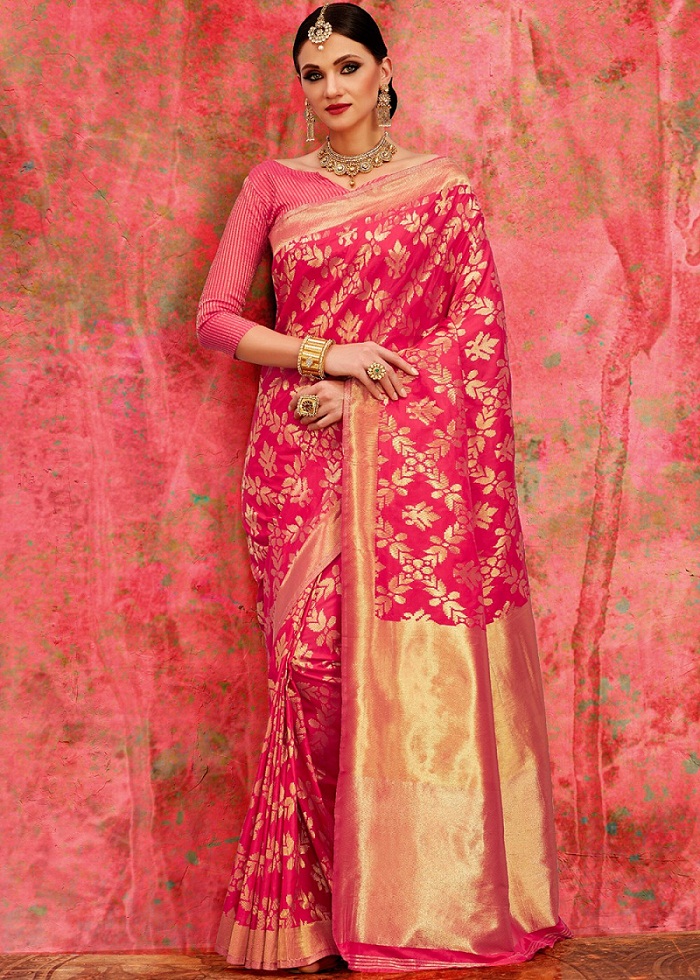
Shattir Banarasi sarees are perfect for those who want a lightweight and modern option for regular wear. This fabric is mainly used to create contemporary and stylish designs. It offers a comfortable feel, making it ideal for daily use while still maintaining a traditional touch.
Katan
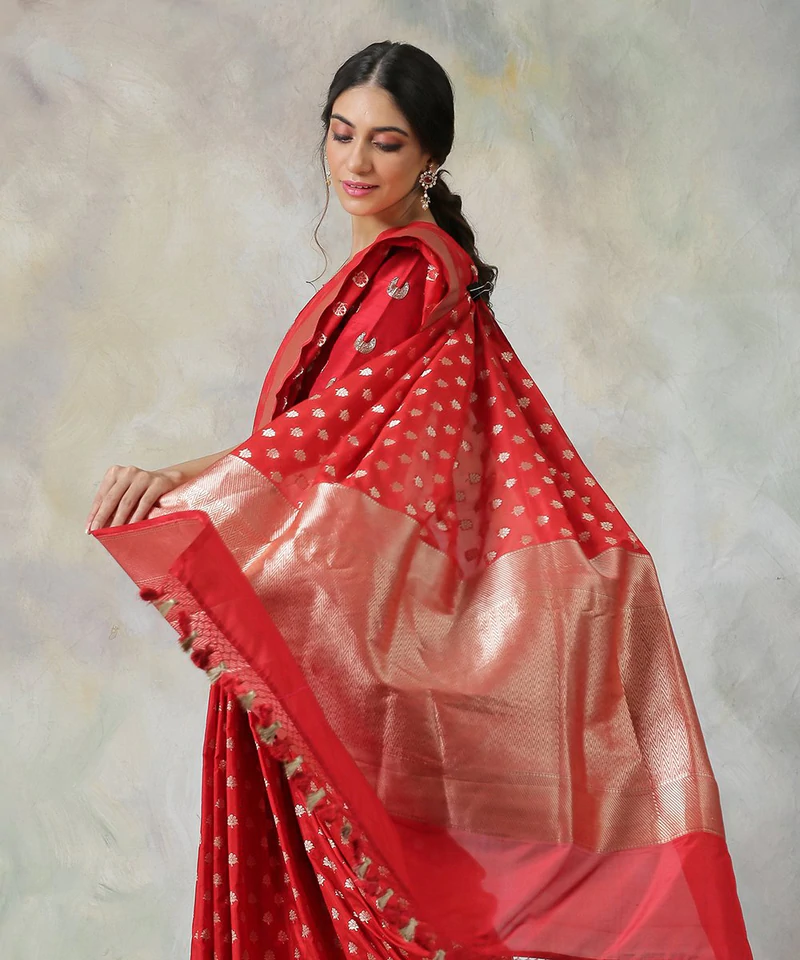
Katan Banarasi sarees are crafted from pure silk threads, giving them a smooth texture and rich shine. Known for their durability and luxurious appeal, they are a popular choice for weddings and special occasions. Traditionally handwoven, many are now produced using power looms for faster production.
Georgette
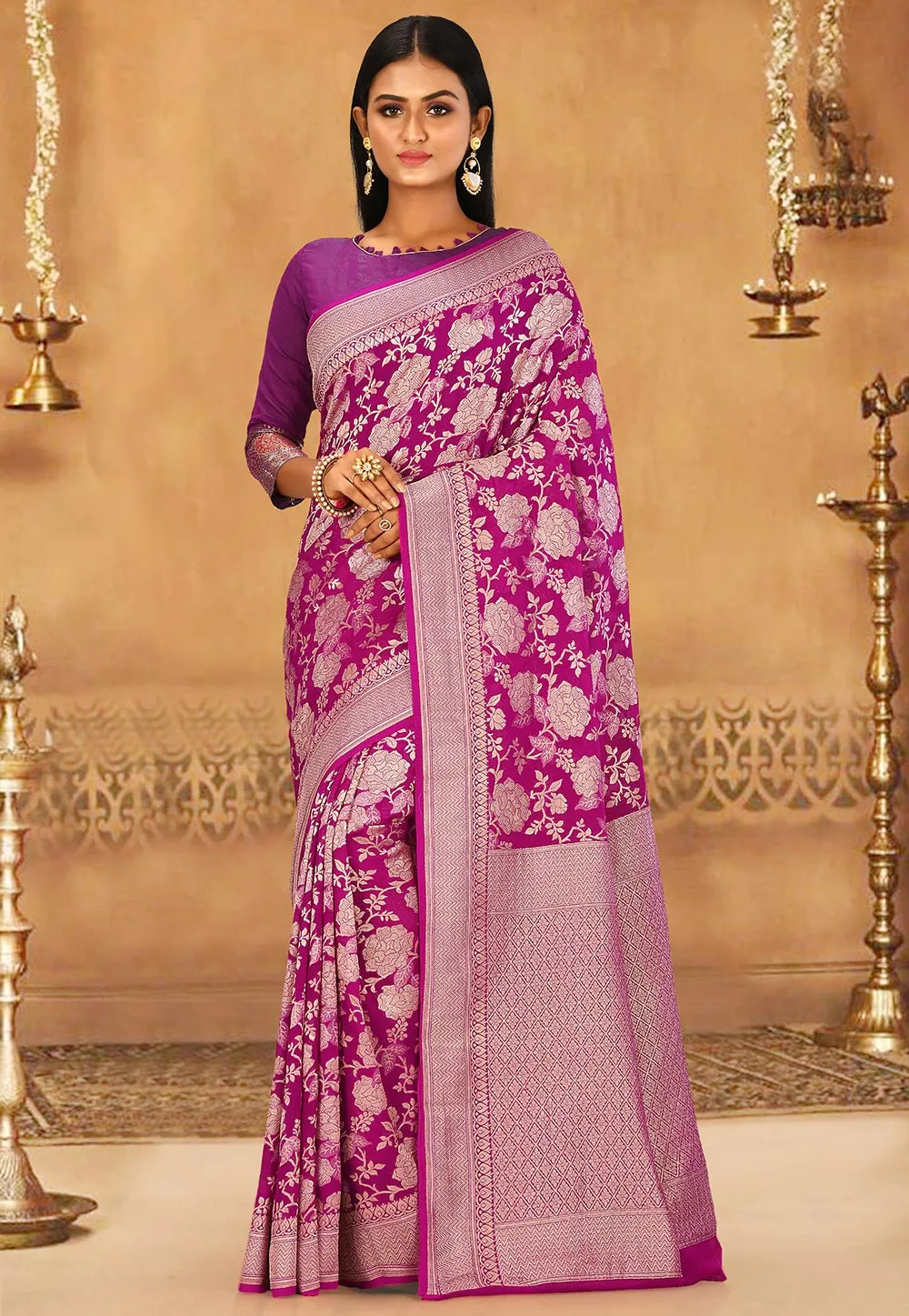
Georgette Banarasi sarees are lightweight, flowy, and easy to carry. Made using twisted yarns, they offer a soft texture and elegant drape. These sarees are perfect for long events, combining comfort with a stylish and modern look.
Shikargarh
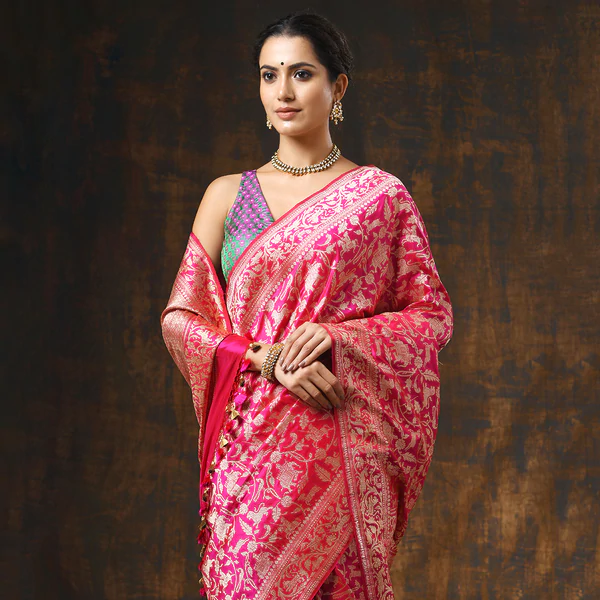
Shikargarh Banarasi sarees are known for their artistic designs inspired by nature, including animals and hunting scenes. These sarees feature detailed zari work on the borders and pallu, making them unique and visually striking.
Tanchoi
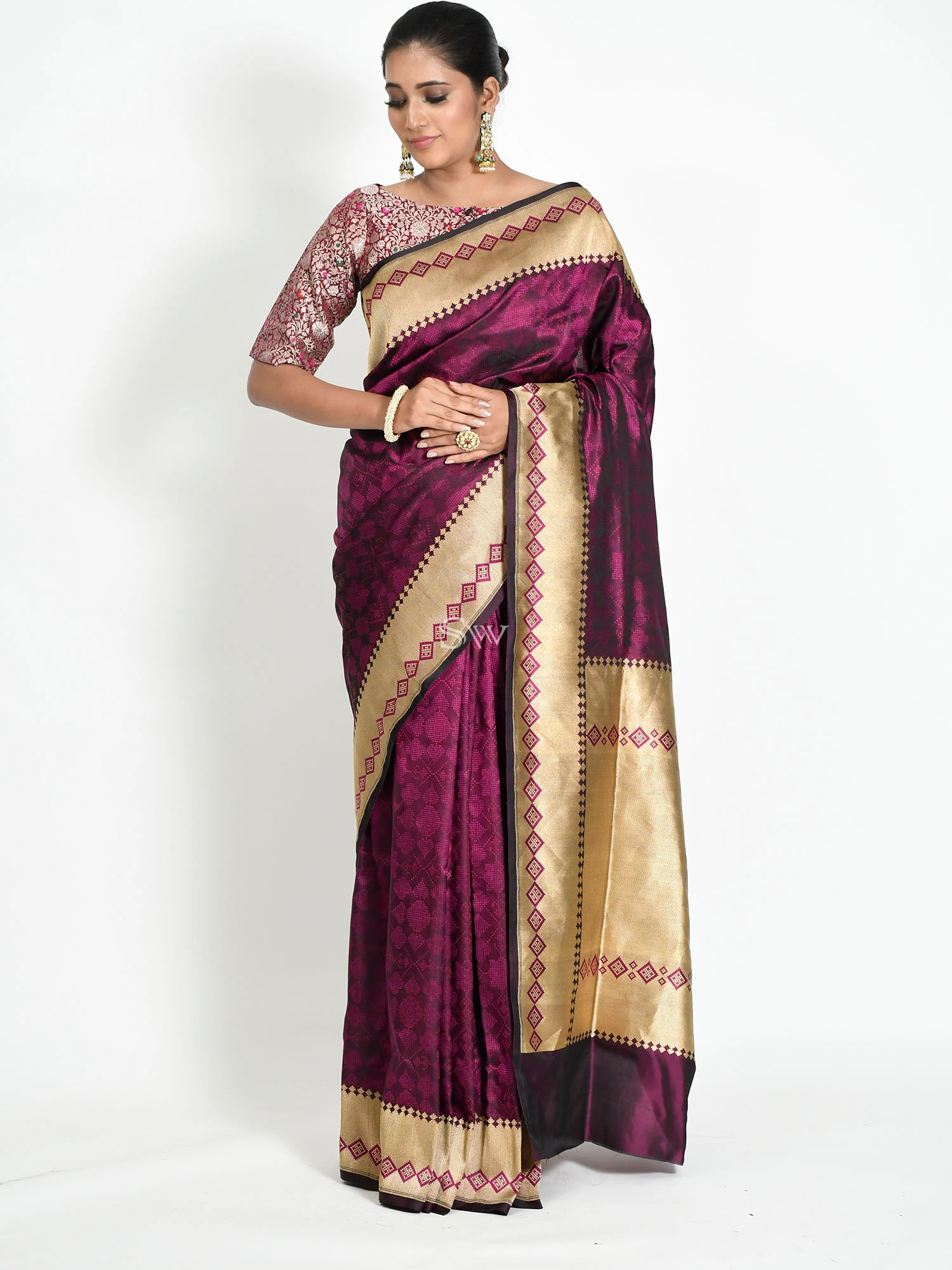
Tanchoi sarees are woven with colorful silk threads and usually do not include heavy zari work. They feature intricate patterns such as paisleys and floral designs, offering a lightweight and comfortable option with a refined look.
Butidar
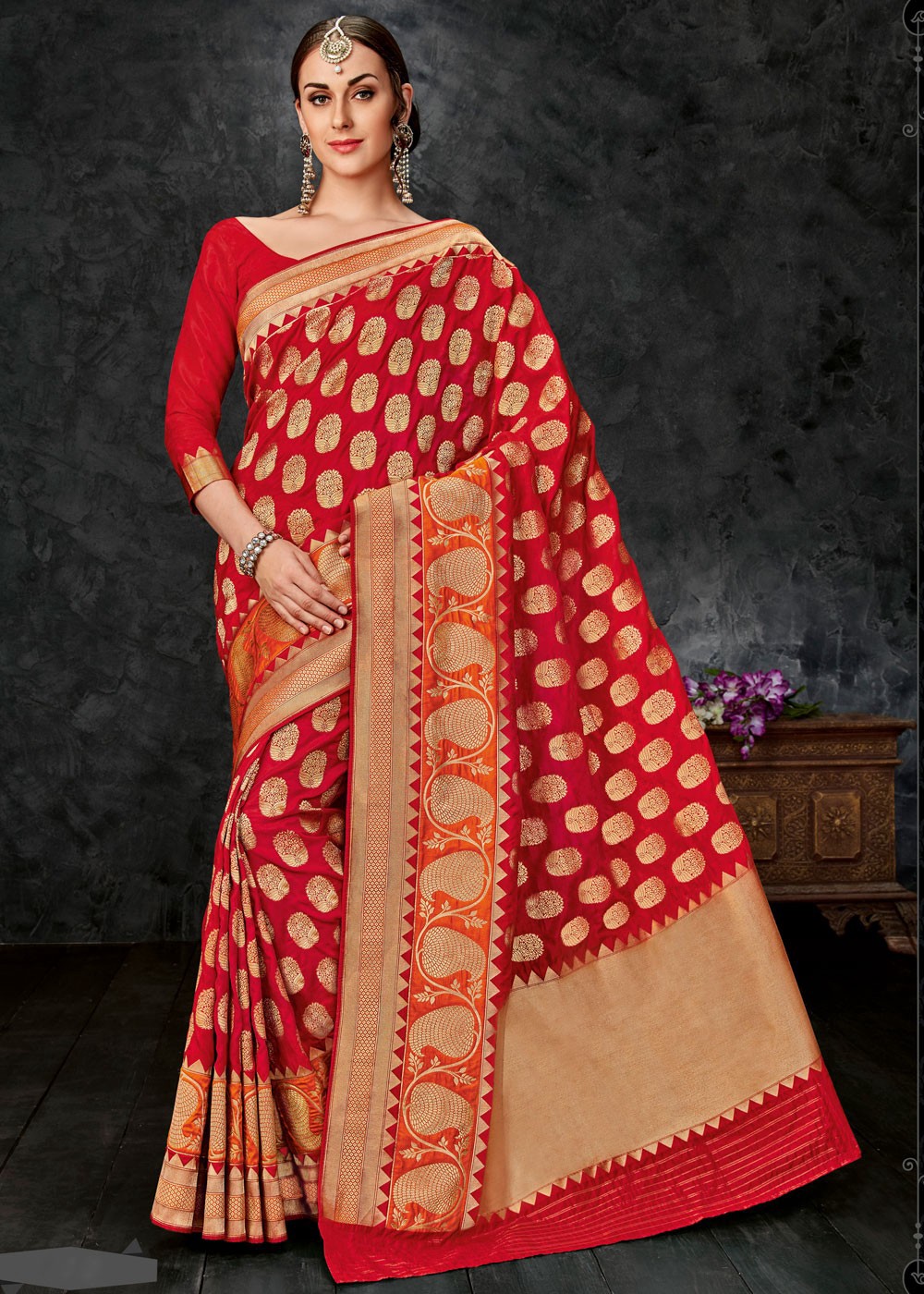
Butidar Banarasi sarees are decorated with small motifs (butis) created using gold and silver threads. These sarees have a rich and royal appearance, often featuring traditional patterns that add elegance and charm.
Cut Work Sarees
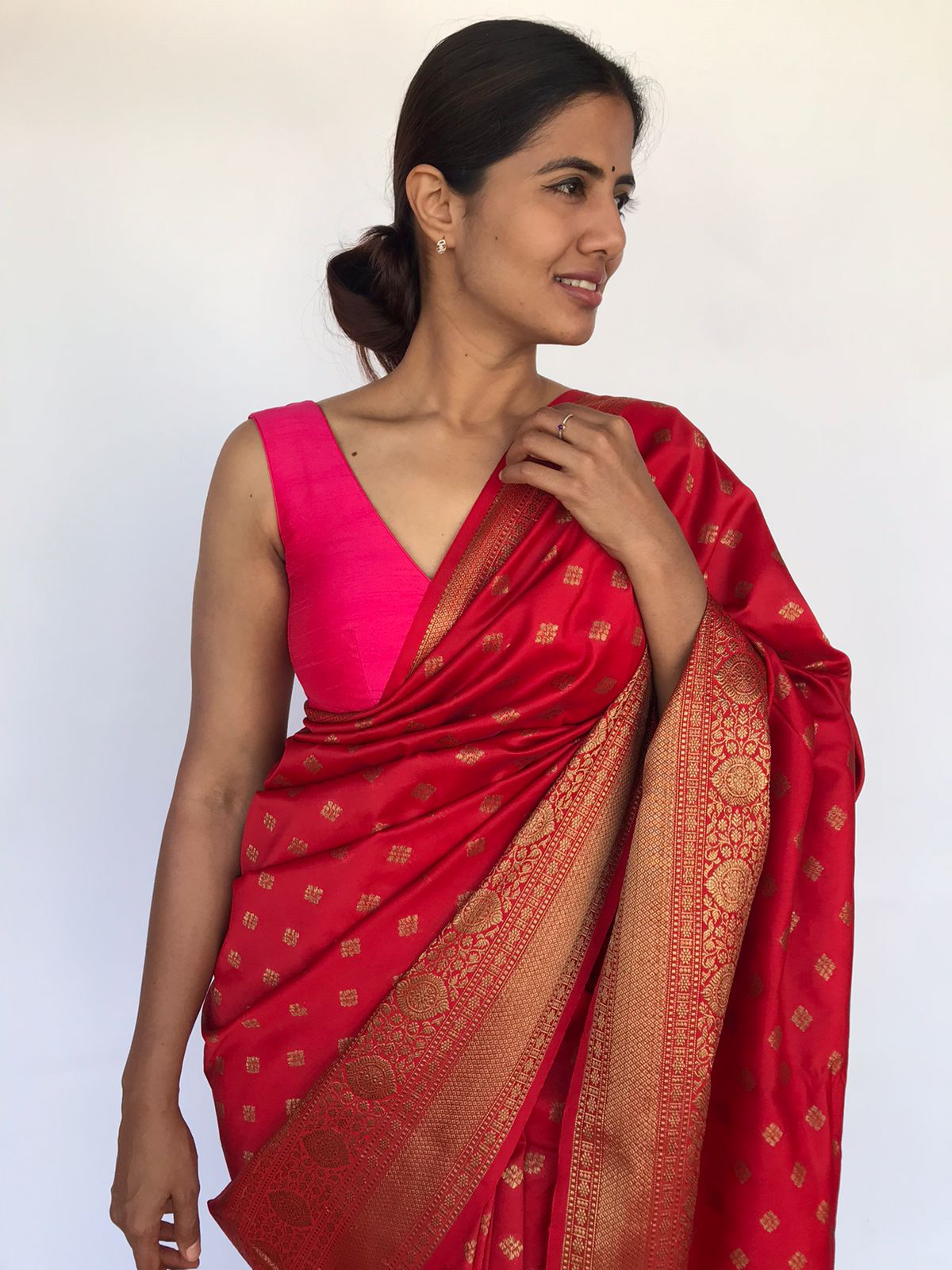
Cutwork Banarasi sarees are designed by removing extra threads to create detailed patterns. They are lighter and more affordable than heavily woven sarees, while still maintaining a traditional aesthetic with floral and natural motifs.
Jangla
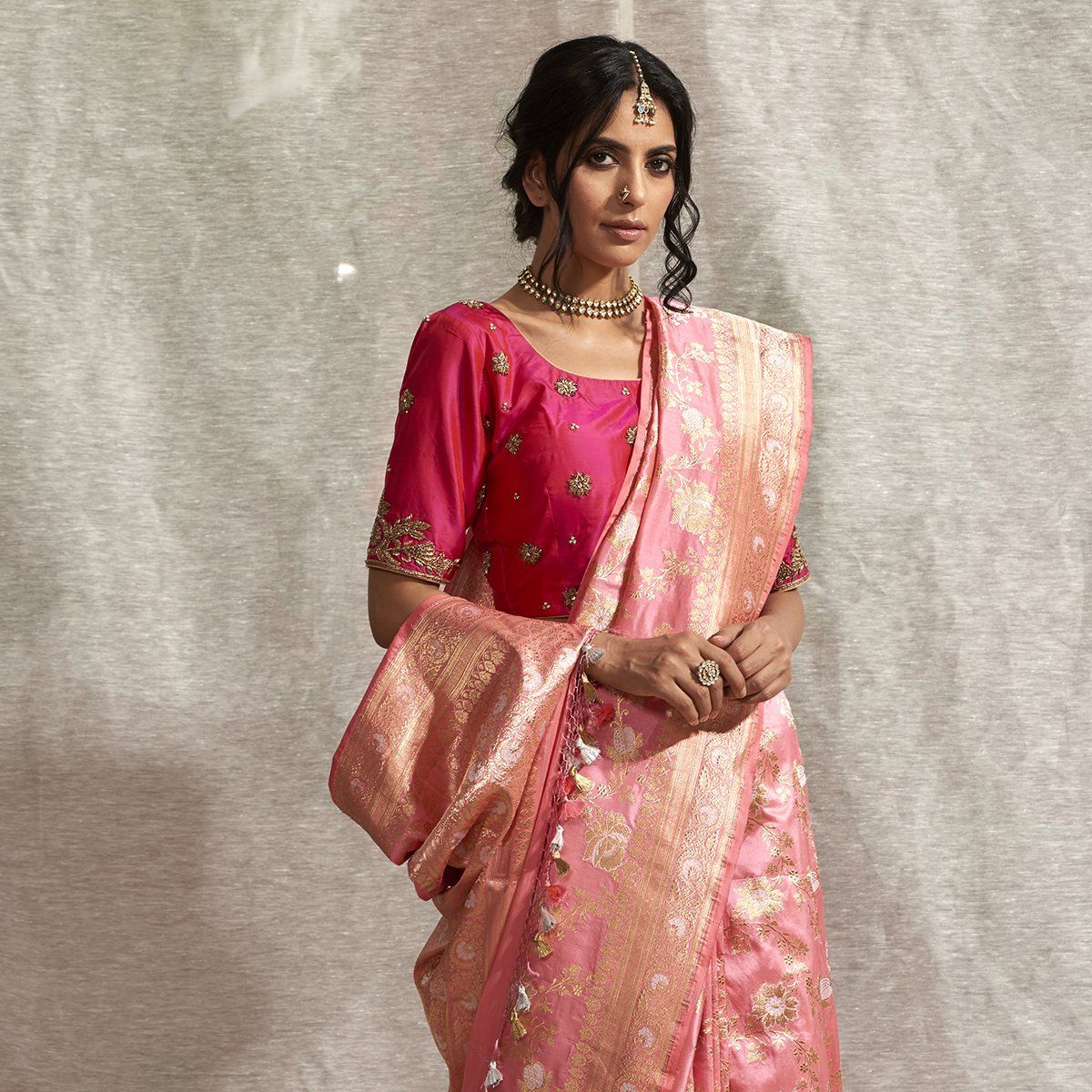
Jangla Banarasi sarees are one of the oldest and most intricate designs. They feature elaborate floral and vine patterns spread across the entire saree. Known for their richness and detailed craftsmanship, they are perfect for weddings and grand occasions.
Tissue Sarees
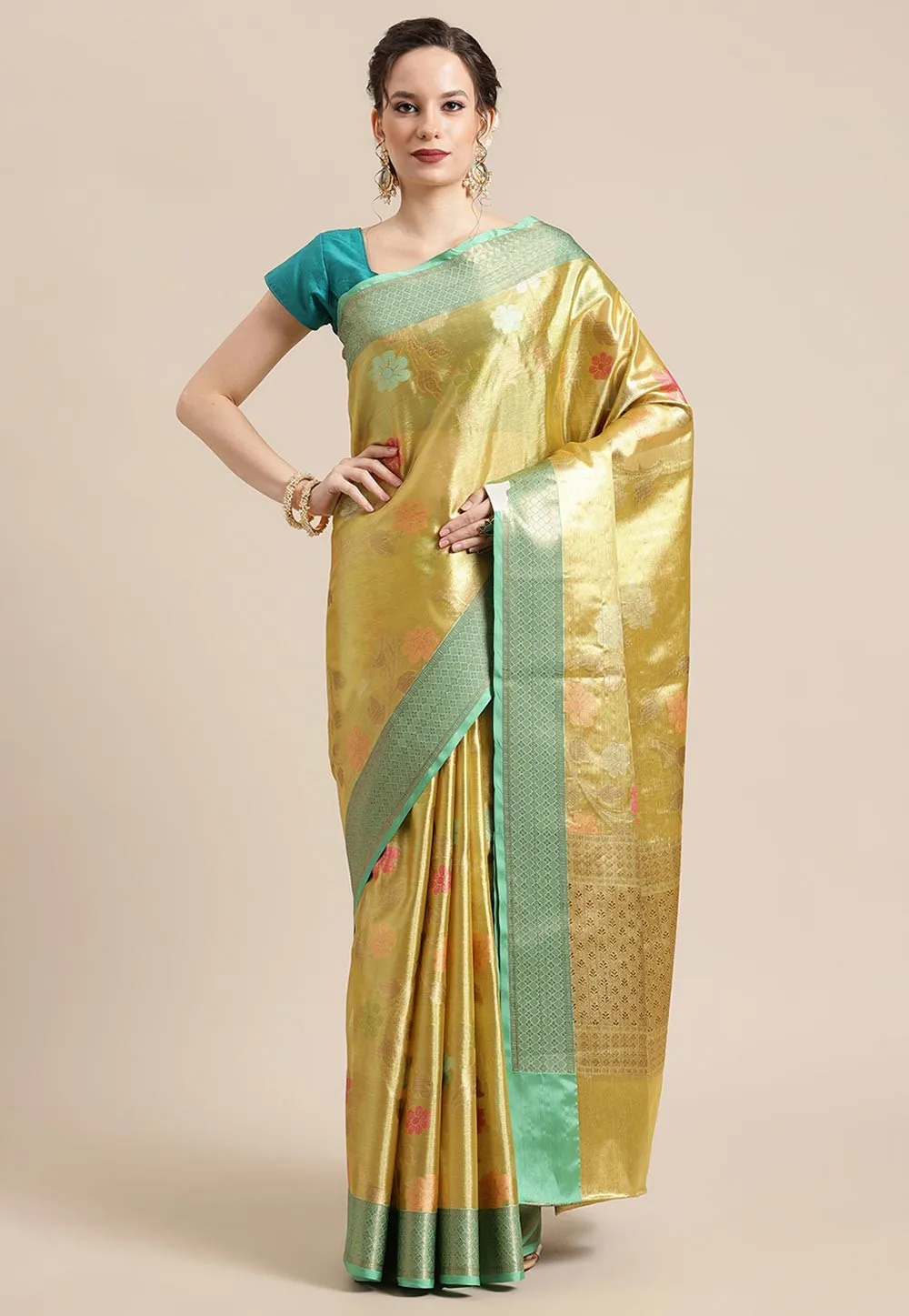
Tissue Banarasi sarees are known for their rich zari weaving that gives them a beautiful shimmering effect. The fine threads create a radiant shine, making these sarees perfect for weddings and festive occasions.
They often feature elegant motifs and intricate patterns, including paisleys along the borders and pallu. One of the most admired designs includes golden zari lotus motifs, giving the saree a royal and luxurious appeal.
Jamdani Sarees
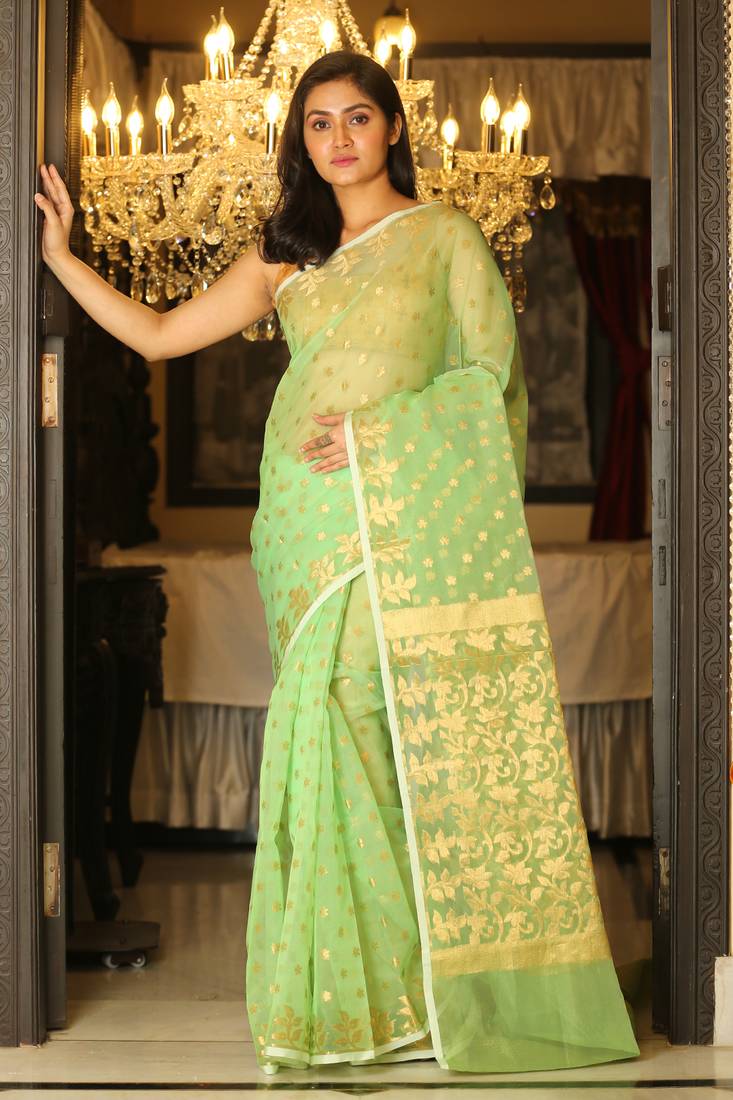
Jamdani sarees are considered a unique variation rather than a traditional Banarasi type. Originally known as Dhakai sarees, they are woven using cotton, silk, and zari threads.
These sarees feature delicate floral motifs crafted using a special weaving technique. Known for their richness and detailed artistry, Jamdani sarees are best paired with simple, solid-colored blouses to balance their heavy look. Silk or cotton silk blouses with elbow-length sleeves complement them beautifully.
Banarasi Silk Shalu
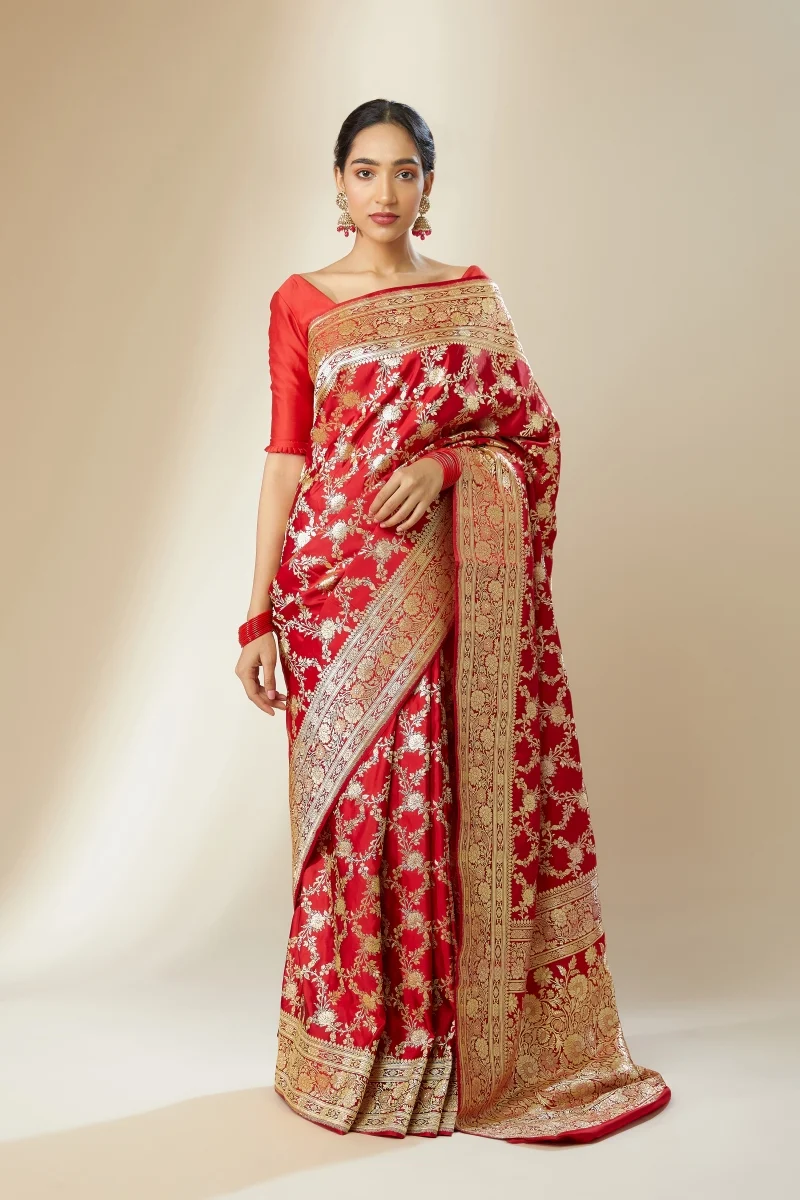
Banarasi Silk Shalu sarees are another elegant variation, crafted using fine silk threads to create detailed patterns and motifs.
They are known for their richly designed borders and heavily decorated pallu, giving them a grand and traditional look. These sarees are especially popular in Maharashtrian weddings and cultural ceremonies.
Organza (Kora) Saree
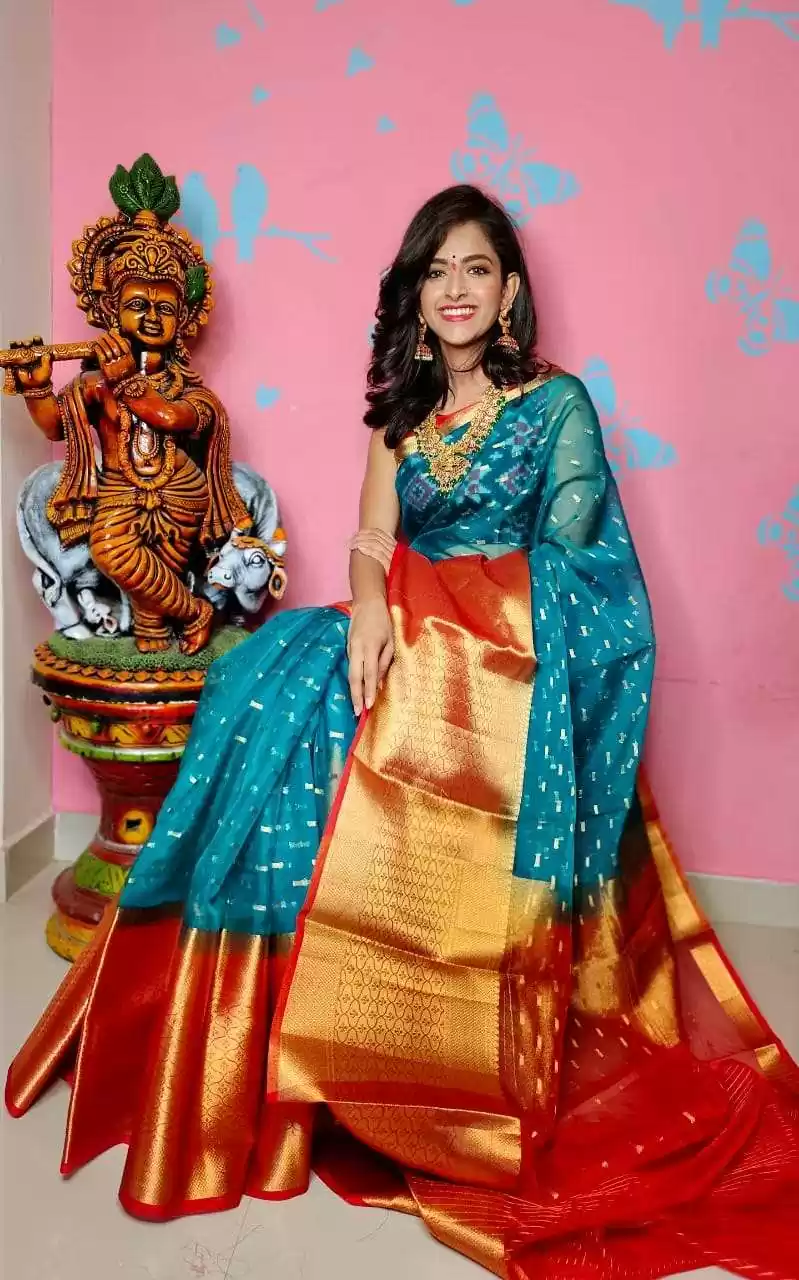
Organza or Kora Banarasi sarees are among the most popular choices due to their lightweight and sheer texture. They feature intricate zari work in gold and silver, adding elegance without making the saree heavy.
These sarees usually have well-defined borders and delicate woven patterns. The smooth and slightly crisp texture gives them a graceful fall, making them comfortable yet stylish.
Color and Motif Selection
Banarasi sarees are available in a wide range of colors, with gold and silver zari being the most prominent highlights. The motifs are largely inspired by Mughal art, including floral patterns, jali work, and nature-inspired designs.
These motifs were originally created to reflect the beauty of paradise, influenced by Mughal architecture and aesthetics. Over time, designs have evolved to include a mix of traditional and modern elements.
While bold colors like red and deep tones are often chosen for weddings, pastel shades are now trending and suit all age groups. The right combination of color and motifs can enhance the overall elegance of the saree and suit different occasions and personal styles.
Conclusion
Banarasi sarees are a true reflection of India’s rich cultural heritage and craftsmanship. From luxurious Katan silk to lightweight Organza and trendy Shattir styles, each type of Banarasi saree offers a unique blend of elegance, tradition, and comfort.
Whether you are dressing for a wedding, festive celebration, or a special occasion, there is a Banarasi saree for every moment. The intricate zari work, beautiful motifs, and timeless appeal make these sarees a valuable addition to any wardrobe.
By understanding the different types available, you can choose a saree that perfectly matches your style, occasion, and comfort. Investing in a Banarasi saree is not just about fashion—it’s about owning a piece of art that can be cherished for years.
FAQs
1. Which type of Banarasi saree is best for weddings?
Katan silk, Jangla, and Tissue Banarasi sarees are ideal for weddings due to their rich fabric, heavy zari work, and grand appearance.
2. Which Banarasi saree is lightweight and easy to wear?
Georgette, Organza (Kora), and Shattir Banarasi sarees are lightweight, making them comfortable for long hours and regular wear.
3. What is the difference between Katan and Organza Banarasi sarees?
Katan sarees are made from pure silk and have a soft, rich texture, while Organza sarees are lighter, slightly crisp, and have a sheer appearance.
4. Are Banarasi sarees suitable for daily wear?
Traditional Banarasi sarees are usually worn for special occasions, but lighter options like Shattir or Georgette can be worn more frequently.
5. How can I identify an original Banarasi saree?
Look for fine silk fabric, detailed zari work, and weaving patterns on the reverse side. Authentic Banarasi sarees often have slight irregularities due to hand weaving.
6. Which blouse goes best with Banarasi sarees?
Silk, brocade, velvet, or heavily embroidered blouses work best as they complement the richness of Banarasi sarees.
7. Which colors are best for Banarasi sarees?
Traditional colors like red, maroon, and gold are popular for weddings, while pastel shades and modern tones are great for festive and contemporary looks.
8. Why are Banarasi sarees expensive?
Banarasi sarees are handcrafted using intricate weaving techniques and zari work, which takes weeks or months to complete, making them valuable and premium.