
Traditional Dress of West Bengal for Men and Women: A Complete Guide

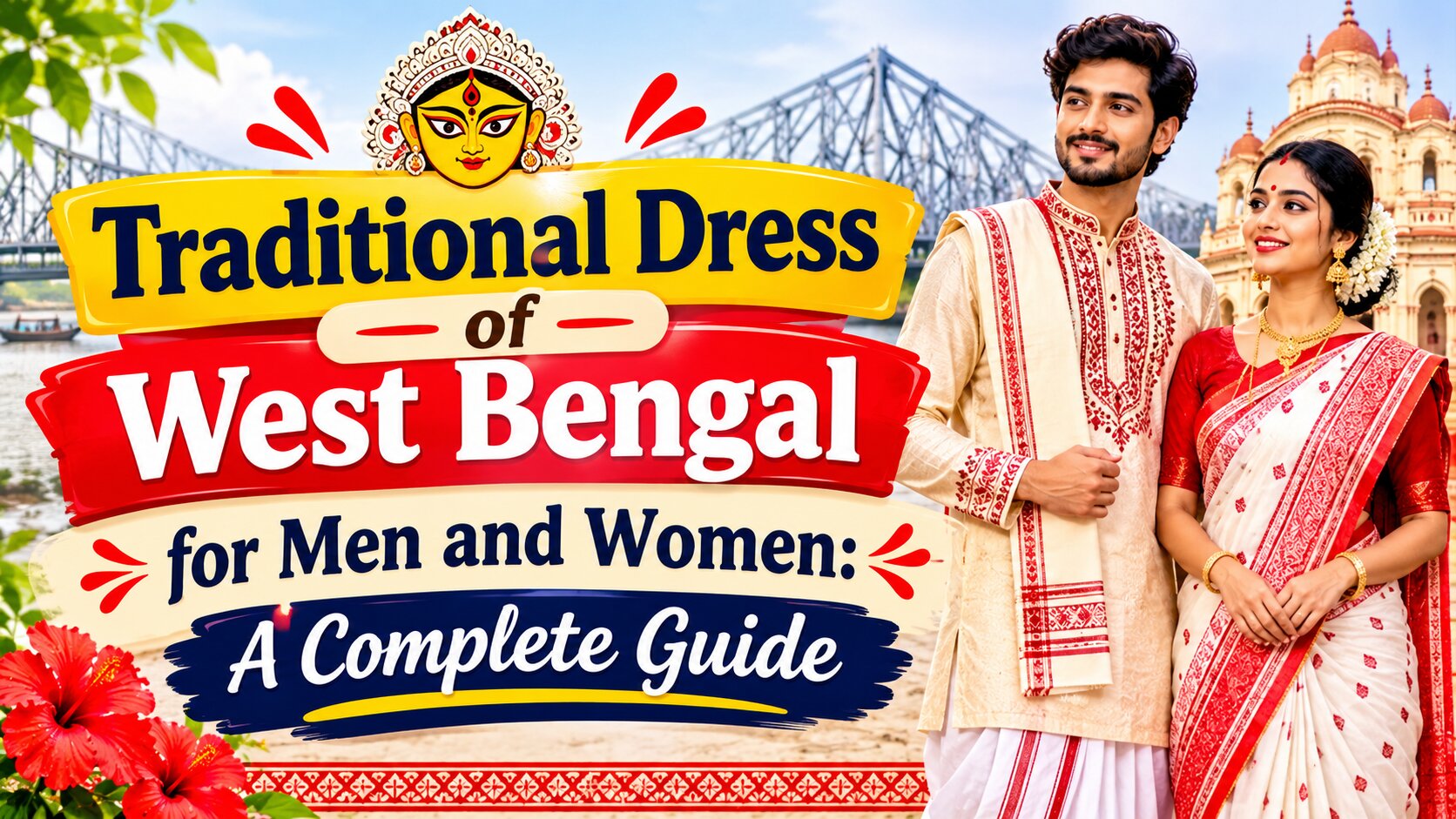
West Bengal is one of India's most culturally rich states, known for its literature, festivals, art, traditional music, handloom textiles, and beautiful clothing. Its traditional dresses reflect centuries of craftsmanship, regional diversity, and cultural heritage.
From the elegant Bengali saree to the classic dhoti and Panjabi worn by men, traditional clothing plays an important role in Bengali celebrations and everyday cultural life. The state is also famous for its distinctive handloom sarees, including Tant, Baluchari, Jamdani, Garad, Korial, and Tussar silk.
Traditional clothing in West Bengal is not limited to Bengali communities. The state's tribal populations and hill communities have their own distinctive garments, fabrics, patterns, and dressing traditions.
Whether it is Durga Puja, Poila Boishakh, a Bengali wedding, or another cultural celebration, traditional attire continues to hold a special place in the lives of people across West Bengal.
In this guide, we will explore the traditional dress of West Bengal for men and women, including popular sarees, traditional men's outfits, tribal clothing, bridal fashion, and the cultural significance of Bengali attire.
Traditional Dress of West Bengal for Men
Traditional Bengali men's clothing is known for its simplicity, comfort, and elegance. The dhoti and Panjabi are among the most recognisable traditional outfits worn by men in West Bengal.
Although modern clothing such as shirts, trousers, and jeans is common today, traditional outfits continue to be popular during festivals, religious ceremonies, weddings, and cultural celebrations.
Let's explore some popular traditional outfits worn by men in West Bengal.
1. Dhoti and Panjabi
The dhoti and Panjabi combination is one of the most iconic traditional outfits for Bengali men.
A dhoti is an unstitched piece of cloth wrapped around the waist and legs. It is traditionally made from cotton, although silk and other fabrics are also used for special occasions.
The Panjabi is a traditional kurta-style garment, generally worn over the upper body. It comes in different colours, fabrics, lengths, and designs.
For everyday cultural occasions, men often prefer simple cotton dhotis with comfortable Panjabis. For weddings and festivals, they may choose silk or richly detailed garments.
The combination is particularly popular during Durga Puja, Saraswati Puja, Poila Boishakh, and Bengali wedding ceremonies.
Key Features:
- Traditional combination of dhoti and kurta.
- Cotton and silk fabric options.
- Available in simple and embroidered designs.
- Suitable for religious and cultural occasions.
- Often paired with sandals or traditional footwear.
2. Pajama and Panjabi
Pajama and Panjabi is another popular traditional-inspired outfit for Bengali men.
A pajama is a comfortable lower garment, while the Panjabi is worn on the upper body. Together, they create an elegant outfit suitable for festive celebrations and family gatherings.
Unlike the dhoti, which requires a particular draping technique, pajamas are stitched garments that are generally easier to wear.
Men often choose white, cream, beige, or pastel-coloured pajamas with embroidered or printed Panjabis.
For weddings and special celebrations, silk and other decorative fabrics can create a more festive appearance.
Key Features:
- Comfortable stitched lower garment.
- Traditional kurta-style upper garment.
- Available in cotton, silk, and blended fabrics.
- Suitable for festivals and family functions.
- Easy to style with traditional footwear.
3. Traditional Silk Panjabi
Silk Panjabis are popular choices for Bengali men during weddings, religious ceremonies, and important cultural celebrations.
Unlike everyday cotton Panjabis, silk versions generally have a richer appearance and can feature decorative buttons, woven patterns, embroidered details, and textured fabrics.
Colours such as cream, ivory, maroon, red, gold, and off-white are commonly selected for festive outfits.
A silk Panjabi can be paired with a white dhoti or matching pajama to create a traditional Bengali look.
For grooms, this combination can be an elegant alternative to Western-style wedding suits.
Key Features:
- Rich silk and silk-blend fabrics.
- Decorative buttons and detailing.
- Suitable for weddings and festive occasions.
- Can be paired with dhoti or pajama.
- Traditional and sophisticated appearance.
Traditional Dress of West Bengal for Women
The saree is the most recognised traditional garment worn by Bengali women. West Bengal is particularly famous for its handloom sarees, which showcase the craftsmanship and artistic skills of local weavers.
Different sarees are selected according to the occasion, season, region, and personal preference.
From lightweight cotton Tant sarees to richly woven Baluchari and Banarasi silk sarees, Bengali women's traditional clothing offers a wide variety of choices.
Here are some of the most popular traditional outfits and sarees worn by women in West Bengal.
1. Tant Saree
The Tant saree is one of the most popular traditional handloom sarees associated with Bengal.
It is generally made from cotton and is appreciated for its lightweight feel, breathable fabric, and comfortable drape.
Tant sarees are particularly suitable for everyday wear and warmer weather. They are available in different colours, patterns, and traditional woven borders.
One of their distinctive characteristics is the decorative border and pallu, which may feature floral, geometric, or other traditional motifs.
Women often wear Tant sarees during Poila Boishakh, family gatherings, cultural programmes, and everyday occasions.
Key Features:
- Traditionally handwoven cotton fabric.
- Lightweight and breathable.
- Decorative borders and pallus.
- Available in many colours and patterns.
- Suitable for everyday and festive wear.
2. Baluchari Saree
The Baluchari saree is one of the most distinctive silk sarees associated with West Bengal.
It is particularly famous for its beautifully woven pallu, which often features detailed scenes inspired by Indian mythology, including stories from the Ramayana, Mahabharata, and Krishna Leela.
Baluchari sarees are traditionally associated with Bishnupur and surrounding areas in the Bankura region.
These sarees are generally woven using silk and require considerable craftsmanship and attention to detail.
Their elaborate patterns make them suitable for weddings, cultural celebrations, religious occasions, and other special events.
Baluchari sarees are not simply garments; they are also an expression of Bengal's textile heritage and traditional weaving skills.
Key Features:
- Traditionally woven silk fabric.
- Detailed mythological and figurative motifs.
- Elaborate pallu designs.
- Associated with Bishnupur, West Bengal.
- Suitable for weddings and special occasions.
3. Jamdani Saree
Jamdani is a celebrated handloom textile tradition known for its delicate patterns and intricate weaving techniques.
Jamdani sarees are appreciated for their lightweight texture, fine fabric, and decorative motifs woven directly into the material.
Traditional patterns may include flowers, leaves, geometric designs, and other artistic elements.
In West Bengal, Jamdani weaving is associated with several weaving communities and handloom centres, including areas around Dhatrigram and Samudragarh.
These sarees are available in different colour combinations, making them suitable for both festive and formal occasions.
Jamdani sarees are especially popular among women who appreciate fine craftsmanship and elegant traditional clothing.
Key Features:
- Fine handwoven textile.
- Intricate floral and geometric patterns.
- Lightweight and elegant appearance.
- Detailed woven motifs.
- Suitable for festive and formal occasions.
4. Garad Saree
Garad sarees are traditionally associated with Bengali religious and cultural occasions.
They are often recognised by their relatively plain white or off-white body and contrasting red or coloured borders.
The fabric is generally silk, giving the saree an elegant and refined appearance.
Garad sarees are frequently selected for pujas, religious ceremonies, and other auspicious occasions.
Their simple colour combination makes them a classic choice for women who prefer traditional Bengali styling.
Key Features:
- Traditional silk saree.
- White or off-white body.
- Contrasting red or coloured border.
- Elegant and relatively simple design.
- Suitable for religious and festive occasions.
5. Korial Saree
Korial sarees are another traditional saree style associated with Bengali celebrations.
They are often characterised by their light-coloured body and contrasting decorative borders.
The fabric and design may vary depending on the weaving tradition and individual saree.
Korial sarees are popular choices for religious ceremonies, cultural programmes, and special family occasions.
They can be paired with traditional blouses, gold jewellery, and other accessories to create a classic Bengali appearance.
Key Features:
- Traditional Bengali saree style.
- Often features light-coloured fabric.
- Decorative contrasting borders.
- Suitable for pujas and celebrations.
- Elegant traditional appearance.
6. Tussar Silk Saree
Tussar silk, also known as wild silk, is valued for its distinctive texture, natural sheen, and rich appearance.
Tussar sarees are available in different designs, including traditional woven patterns, printed motifs, and hand-embroidered details.
In West Bengal, Tussar silk is part of the state's broader silk textile tradition.
These sarees can be styled for festive occasions, cultural events, family functions, and formal gatherings.
Their slightly textured appearance makes them a distinctive choice for women who prefer traditional silk clothing with a natural finish.
Key Features:
- Natural silk fibre.
- Distinctive texture and sheen.
- Traditional and contemporary designs.
- Available in different colours and patterns.
- Suitable for festive and formal occasions.
7. Kantha Work Saree
Kantha is a traditional embroidery technique closely associated with Bengal's textile heritage.
It is known for its running-stitch embroidery, which can create beautiful patterns inspired by nature, flowers, animals, everyday life, and traditional stories.
Kantha work is used on different textile products, including sarees, shawls, stoles, quilts, and other fabric items.
Kantha-embroidered sarees are appreciated for their handmade appearance and artistic detailing.
They are suitable for cultural celebrations, casual occasions, and gatherings where traditional craftsmanship is appreciated.
Key Features:
- Traditional running-stitch embroidery.
- Handmade decorative patterns.
- Floral, geometric, and nature-inspired motifs.
- Used on cotton and silk textiles.
- Distinctive Bengali craftsmanship.
Traditional Bridal Dress of West Bengal
Bengali weddings are known for their beautiful rituals, cultural traditions, and distinctive bridal clothing.
The traditional Bengali bride often wears a red or richly coloured Banarasi silk saree, complemented by traditional jewellery and bridal accessories.
Red is widely associated with auspiciousness, celebration, and marriage in Bengali wedding traditions.
The bridal look is generally completed with traditional gold jewellery, decorative headgear, and the characteristic white and red bridal makeup details.
1. Banarasi Saree
Banarasi sarees are among the most popular choices for Bengali brides.
Although Banarasi silk originates from the weaving tradition of Varanasi in Uttar Pradesh, it has become an important part of Bengali bridal fashion.
These sarees are known for their intricate brocade work, rich silk fabric, and decorative zari patterns.
Red, maroon, and other rich colours are frequently chosen for Bengali wedding ceremonies.
Key Features:
- Rich silk fabric.
- Decorative zari and brocade work.
- Traditional wedding colours.
- Elaborate borders and motifs.
- Popular Bengali bridal choice.
2. Bengali Bridal Jewellery
Jewellery is an important part of traditional Bengali bridal styling.
Gold jewellery is commonly worn with bridal sarees, including necklaces, earrings, bangles, and other traditional ornaments.
The bride may also wear the traditional mukut, a decorative headpiece that forms an important part of Bengali bridal attire.
Other distinctive elements include the shankha and pola, traditional conch-shell and red bangles associated with married Bengali women.
Together, these accessories complete the traditional Bengali bridal appearance.
Traditional Dress of Tribal Communities in West Bengal
West Bengal is home to several tribal communities, each with its own cultural traditions, textiles, jewellery, and clothing styles.
Their traditional garments may differ from mainstream Bengali attire in terms of fabric, draping techniques, colours, and decorative patterns.
The Santhal community is one of the prominent tribal communities in the state.
1. Traditional Dress of Santhal Men
Traditional Santhal men's clothing commonly includes a dhoti or other wrapped lower garment, paired with a simple upper garment or cloth depending on the occasion and community practice.
For cultural performances and festivals, traditional attire may be complemented by distinctive accessories and headwear.
Clothing practices have evolved over time, and contemporary Santhal men also wear modern shirts, trousers, and other everyday garments.
2. Traditional Dress of Santhal Women
Santhal women's traditional clothing includes distinctive draped garments, often featuring combinations of white, red, and other colours.
The way the fabric is wrapped and arranged reflects community traditions and cultural identity.
Women may also wear traditional jewellery and accessories during festivals, ceremonies, and cultural performances.
Today, clothing styles vary considerably, with traditional draped garments often worn alongside modern blouses and other contemporary clothing.
3. Traditional Attire of Hill Communities
The Darjeeling and Kalimpong regions of West Bengal have different cultural influences from the plains.
People belonging to communities in these hill regions wear a variety of traditional garments, including wrap-on clothing, long skirts, blouses, tunics, woollen trousers, coats, and other regionally distinctive outfits.
The fabrics and clothing styles are influenced by local climate, cultural identity, and community traditions.
This regional diversity makes the traditional clothing heritage of West Bengal particularly interesting.
Traditional Dress of West Bengal During Festivals
Festivals are among the best occasions to see traditional Bengali clothing.
People often choose special garments that reflect the cultural importance of the celebration.
1. Durga Puja
Durga Puja is one of the biggest cultural celebrations in West Bengal.
During the festival, women commonly wear traditional sarees such as Tant, Garad, Korial, and other silk sarees.
Red-and-white sarees are particularly popular during traditional rituals and celebrations.
Men often wear dhoti-Panjabi combinations, kurtas, or other festive outfits.
2. Poila Boishakh
Poila Boishakh marks the Bengali New Year and is celebrated with enthusiasm across West Bengal.
Women often wear colourful cotton and silk sarees, while men choose traditional Panjabis and dhotis.
Red, white, yellow, and other bright colours are popular choices for the occasion.
3. Saraswati Puja
Saraswati Puja is another important cultural occasion, especially among students and educational institutions.
Yellow is a popular colour associated with the festival.
Women often choose yellow sarees or salwar kameez, while men may wear yellow or cream-coloured kurtas and traditional Panjabis.
Traditional Jewellery and Accessories of West Bengal
Traditional Bengali clothing is often complemented by jewellery and accessories that enhance the overall appearance.
Some popular examples include:
- Shankha: Traditional conch-shell bangles.
- Pola: Red bangles traditionally worn by married Bengali women.
- Loha: Iron bangle traditionally associated with married women in many Bengali communities.
- Gold Necklaces: Traditional jewellery worn during weddings and festivals.
- Mukut: Decorative headpiece worn by Bengali brides.
- Traditional Earrings: Gold and other decorative earrings worn with sarees.
- Uttariya: A traditional upper-body cloth or scarf that can complement men's festive clothing.
These accessories are an important part of traditional Bengali styling, although customs vary between families and communities.
How Traditional Bengali Clothing Has Changed Over Time
Traditional clothing in West Bengal has evolved with changing lifestyles, fashion preferences, and social influences.
In earlier generations, sarees and dhoti-Panjabi combinations were widely associated with traditional dressing.
Today, people wear a much broader range of clothing, including shirts, trousers, jeans, salwar kameez, kurtas, dresses, and contemporary ethnic outfits.
However, traditional clothing continues to be popular during weddings, festivals, religious ceremonies, and cultural programmes.
Handloom sarees and traditional men's garments remain important symbols of Bengali cultural identity.
Final Thoughts
The traditional dress of West Bengal reflects the state's rich cultural heritage, artistic craftsmanship, and regional diversity.
From the classic dhoti and Panjabi worn by Bengali men to the beautiful Tant, Baluchari, Jamdani, Garad, and Tussar sarees worn by women, every garment represents a unique part of Bengal's textile tradition.
The clothing of tribal and hill communities adds even more diversity to the state's traditional fashion.
Whether it is the grandeur of a Bengali wedding, the celebrations of Durga Puja, or the joy of Poila Boishakh, traditional attire continues to connect people with their cultural roots.
West Bengal's traditional clothing is not just about fashion; it is a celebration of craftsmanship, heritage, identity, and timeless elegance.
FAQs
1. What is the traditional dress of West Bengal?
The traditional dress of West Bengal includes sarees for women and dhoti-Panjabi for men. Popular Bengali sarees include Tant, Baluchari, Jamdani, Garad, Korial, and Tussar silk.
2. What is the traditional dress of Bengali men?
Bengali men traditionally wear a dhoti paired with a Panjabi (kurta). This outfit is commonly worn during Durga Puja, weddings, religious ceremonies, and cultural celebrations.
3. What is the traditional dress of Bengali women?
Bengali women traditionally wear sarees, particularly Tant, Baluchari, Garad, Korial, and Jamdani. These sarees are popular for everyday wear, festivals, and special occasions.
4. Which saree is famous in West Bengal?
Tant and Baluchari sarees are among the most famous sarees associated with West Bengal. Jamdani, Garad, Korial, and Tussar silk sarees are also popular for their traditional designs and craftsmanship.
5. What do Bengali women wear during Durga Puja?
During Durga Puja, Bengali women commonly wear traditional sarees, especially red-and-white Tant, Garad, and other silk sarees. They often complete their outfits with gold jewellery, bangles, and traditional accessories.
6. What do Bengali men wear during Durga Puja?
Bengali men commonly wear dhoti-Panjabi, traditional kurtas, and pajamas during Durga Puja. White, cream, yellow, and other festive colours are popular choices.
7. What is a Tant saree?
A Tant saree is a traditional Bengali handloom saree generally made from cotton. It is known for its lightweight fabric, breathable texture, and decorative borders, making it suitable for everyday and festive wear.
8. What is a Baluchari saree famous for?
A Baluchari saree is famous for its intricate silk weaving and decorative pallu, which often features mythological stories and scenes from Indian epics. It is traditionally associated with Bishnupur in West Bengal.
9. What is the traditional bridal dress of West Bengal?
The traditional Bengali bride commonly wears a red or richly coloured Banarasi silk saree. The bridal look is complemented by gold jewellery, a traditional mukut, and distinctive Bengali bridal makeup.
10. Which colour is traditionally worn by Bengali brides?
Red is one of the most popular colours worn by Bengali brides. It is traditionally associated with auspiciousness, marriage, and celebration. Maroon and other rich shades are also chosen.
11. What is a Garad saree?
A Garad saree is a traditional Bengali silk saree often recognised by its white or off-white body and contrasting red border. It is commonly worn during religious ceremonies, pujas, and festive occasions.
12. What is Kantha work in Bengali clothing?
Kantha is a traditional embroidery technique associated with Bengal. It uses running stitches to create decorative patterns inspired by flowers, animals, nature, and everyday life. Kantha embroidery is commonly found on sarees, shawls, and other textiles.
13. What is the traditional dress of Santhal women in West Bengal?
Santhal women traditionally wear draped garments featuring distinctive colours and patterns. Their traditional clothing is often complemented by jewellery and accessories during festivals and cultural celebrations.
14. What do people wear during Poila Boishakh in West Bengal?
During Poila Boishakh, women often wear colourful cotton or silk sarees, while men commonly choose dhoti-Panjabi or traditional kurtas. Red, white, yellow, and other bright colours are popular.
15. What makes the traditional dress of West Bengal unique?
The traditional dress of West Bengal is unique because of its rich handloom heritage, distinctive weaving techniques, intricate embroidery, and regional diversity. Sarees such as Tant, Baluchari, and Jamdani represent Bengal's craftsmanship and cultural identity.