
In this article
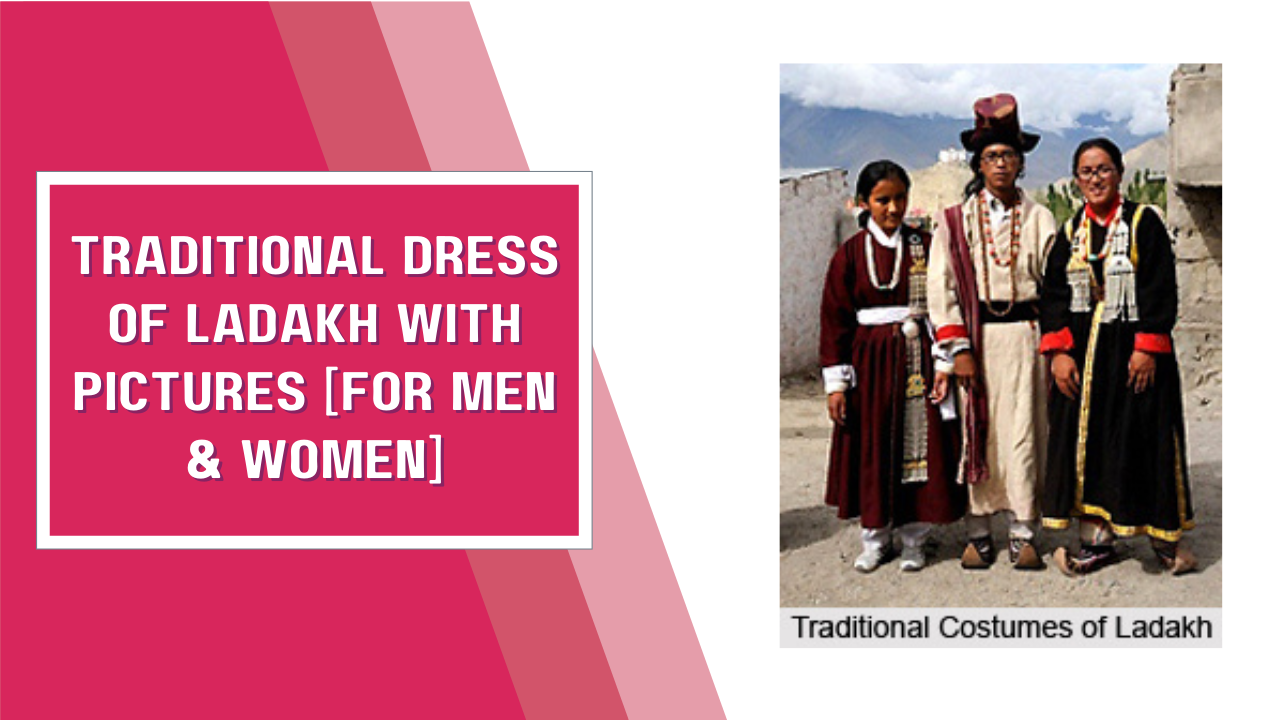
Looking for traditional dresses of Ladakh for men and women? Ladakhi dress is practical first: long robes, sashes and capes that trap warmth in the Himalayan cold, then signal marital status, community and ceremony through colour and fabric.
| Garment | Who wears it | Best occasion | Main materials | Layer / accessory | Notes |
|---|---|---|---|---|---|
| Goncha (Kos) | Men | Daily & ceremony | Wool, velvet, cotton blends [VERIFY] | Skerag waist sash | Charcoal, maroon, grey, earth tones |
| Sulma | Married women (public/traditional) | Daily & festive | Silk, brocade, velvet by season [VERIFY] | Skerag + blouse | Full, gown-like silhouette |
| Skerag | Men & women | With goncha/sulma | Thick woven cloth | Ties at waist | Colourful structural sash |
| Kos Kar | Changpa nomads | Herding / harsh weather | Sheep wool & skin (inside-out) | — | Distinct nomadic marker |
| Lokpa | Women | Daily load-carrying / warmth | Sheepskin | Over shoulders | Work cape / cushioning |
| Yogar (Yogpar) | Women | Daily & dressed looks | Brocade/cotton + wool, tassels | Over shoulders | Rainbow tassels common |
| Bok | Women | Special occasions | Designer yogar variant [VERIFY] | Festive cape | Dressier cape styling |
How we chose what to include
- Local garment names people actually search (goncha, sulma, skerag, kos kar).
- Men’s and women’s coverage for balanced intent.
- Climate logic — why materials exist, not fashion fluff.
- Community variation — settled Ladakhi dress vs Changpa nomadic wear.
- Ceremony vs daily — embroidery and imported silks for weddings [VERIFY regional practice].
Goncha (Kos) — traditional dress of Ladakh for men
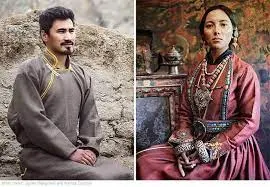
The goncha, also called kos, is the wide men’s robe that defines classic Ladakhi male dress. It is cut generously, worn with a skerag at the waist, and appears in charcoal, maroon, grey and earthy tones.
Everyday gonchas favour warm woollen and blended cloth; wedding and formal gonchas may use silk, velvet and brocade with richer finishes, historically linked to trade routes toward Nepal and Bhutan [VERIFY local sourcing stories].
Pro: Genuine cold-weather coverage with cultural clarity. Con: Bulky for first-time wearers—learn to belt the skerag correctly. Pairs well with: Soft boots, winter hat traditions of the region, and simple inner layers.
Sulma — traditional Ladakhi dress for women
In public traditional contexts, married Ladakhi women are associated with the sulma—a vibrantly coloured, full robe that can read almost gown-like. Season decides silk, brocade or velvet weight [VERIFY].
A skerag ties the waist. Underneath, nylon, cotton or silk blouses with fuller sleeves complete the set for a more formal presentation.
Pro: Strong cultural signal and photogenic structure. Con: Warmth and weight vary—choose fabric for season, not only colour.
Searchers looking for Ladakhi dress online should verify seller authenticity, fibre content and fair sourcing; tourist-market pieces may simplify embroidery or cut.
Skerag — the waist sash that structures the look
Skerag is the thick colourful sash wrapped at the waist over goncha or sulma. It is structural (holds the robe) and decorative (colour blocking). If a costume set omits a proper skerag, the silhouette collapses—hence the query interest in “skerag” on its own.
Kos Kar — Changpa nomadic dress
Changpa communities near high pasture zones wear kos kar, made from sheep wool and skin turned for maximum insulation. It is a practical marker of nomadic life, distinct from town ceremonial dress.
Pro: Extreme-weather logic. Con: Not a fashion costume—treat with cultural respect; do not trivialise as a party theme.
Lokpa and Yogar (Yogpar) — traditional capes
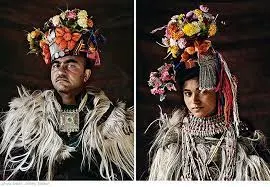
Women traditionally wear square lokpa and yogar/yogpar around the shoulders. Lokpa leans sheepskin for work and warmth; yogar may combine brocade or cotton with sheep wool and rainbow tassels. These capes warm the back and cushion loads.
Bok refers to a dressier yogar-style cape for special occasions [VERIFY naming in local use].
Clothing of Ladakh — climate before fashion
Ladakh’s altitude and dry cold explain long robes, wool, skin layers and sashes. Modern jackets appear in towns, yet traditional sets remain central to festivals, performances and identity. Dress is heritage practice, not only tourist wardrobe.
Compare regional dress systems across India for context: traditional dress of West Bengal, traditional dress of Uttarakhand, traditional dress of Goa, traditional dress of Delhi, and traditional dress of Assam.
Ladakh men outfit vs women’s set — quick map
- Men: Goncha/kos + skerag (+ ceremonial upgrades).
- Women: Sulma + skerag + blouse + lokpa/yogar as needed.
- Nomadic: Kos kar as distinctive outer wear.
“Dress Chang” style queries often point people toward Changpa-related dress vocabulary—start with kos kar and community context rather than generic “Ladakh costume” packs.
Where culture meets respectful modern wear
Visitors can admire and photograph festival dress with permission; buying should favour artisans or verified sellers. Avoid treating sacred or community-specific pieces as disposable fancy dress.
Traditional dress Ladakh — men’s details worth noticing
A well-made goncha hangs with intentional volume rather than sloppy bagginess. The skerag cinches at a height that lets you walk and sit; too high and the robe rides, too low and the silhouette droops. Ceremonial versions may show richer sheen and finer finishing at cuffs and fronts [VERIFY artisan practices by village and occasion].
Footwear and headwear complete the Ladakh men outfit story in cold winds—practical boots and warm caps matter as much as robe colour. Photographers chasing “costume of Ladakh” shots should ask before posing elders or performers.
Women’s set: blouse, sulma, cape
The sulma’s fullness is part of its identity. Pairing blouses in cotton, nylon or silk changes formality. Capes (lokpa/yogar) are not optional decoration in traditional cold-weather practice—they are insulation and, historically, load cushions. Rainbow tassels on yogar pieces are a distinctive visual cue travellers remember.
When searching ladakh traditional dress galleries, look for skerag presence and cape type to judge whether an image is documentary or stylised tourism content.
Dress of Ladakh for festivals vs daily life
Festival and performance contexts keep full traditional sets visible even as town wardrobes adopt modern jackets. That dual reality explains why some visitors think traditional dress has “vanished” while locals still bring it out for Losar-adjacent celebrations, cultural shows and family ceremonies [VERIFY event calendars locally].
Clothing in Ladakh — packing vs cultural dress
Tourists packing for Leh should prioritise modern thermal layers for trekking safety. Cultural garments are a separate topic from packing lists. Buying a mini skerag or souvenir textile differs from commissioning a full sulma—be clear which you want.
Respect checklist before you buy or wear
- Ask who made it and whether the piece is appropriate for non-local wear.
- Prefer fair payment to artisans over anonymous factory “Ladakhi costume” labels when possible.
- Do not treat kos kar or ceremonial pieces as Halloween-style costume.
- Credit communities when publishing photos.
How traditional dresses of Ladakh compare to other Indian regions
Every region solves climate and identity differently: Bengal’s cotton/silk drape logic, Uttarakhand hill layers, Assam’s woven sets, Goa’s coastal mix, Delhi’s court-and-capital blend. Ladakh’s answer is long robes + sashes + skin/wool capes. Use sister guides for contrast, not substitution: West Bengal, Uttarakhand, Goa, Delhi and Assam traditional dress pages linked above.
Thin content fixed: what was missing before
Older short versions named garments but skipped comparison structure, Changpa context, online-buying caution, and FAQ clarity for “skerag” and “dress chang”-style queries. This rewrite expands those gaps without inventing fake statistics or tourism board awards.