In this article
A printed Hakoba blouse can fit well at the bust and still pull at the shoulder or bunch above your saree tuck. The easiest way to choose one is to identify where your usual blouse feels tight, loose or too short.
This guide covers ten cuts for different fit needs, from fuller upper arms to a shorter torso. Use the examples to compare necklines, sleeves and lengths, then check your measurements against the blouse you’re actually planning to wear.
10 Printed Hakoba Blouse Cuts for Different Fit Needs
1. Princess-Seam V-Neck for a Fuller Bust
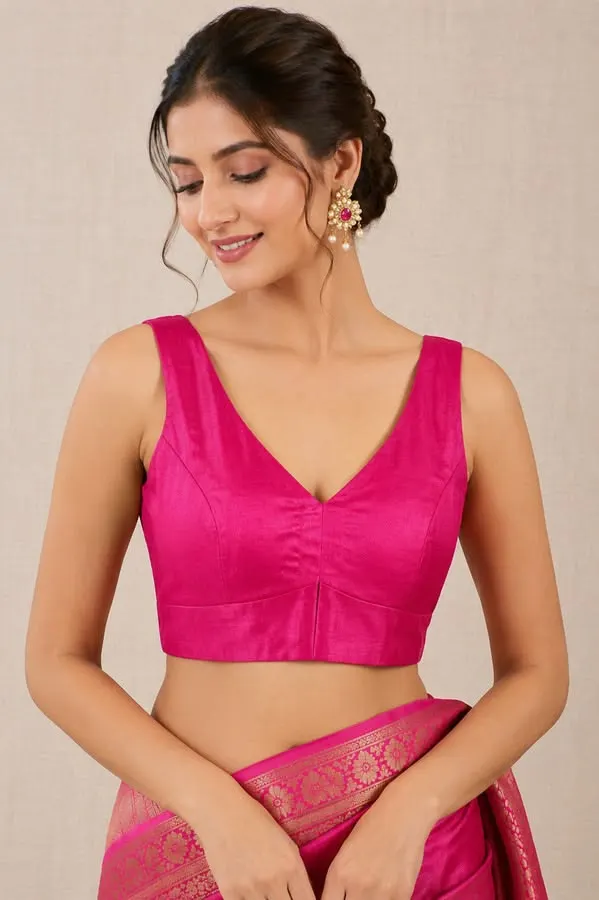
Curved princess seams run over the bust, giving a tailor more control over the shape of the bodice. A shallow V opens the neckline slightly while leaving space for the pallu to sit across the chest.
Try the blouse with the bra you’ll wear under the saree. The seams should follow your shape smoothly, and the V should lie flat when you sit. Look for a lined bodice if you want more coverage through the eyelets.
2. Front-Hook Scoop Neck for Easy Bust Adjustments
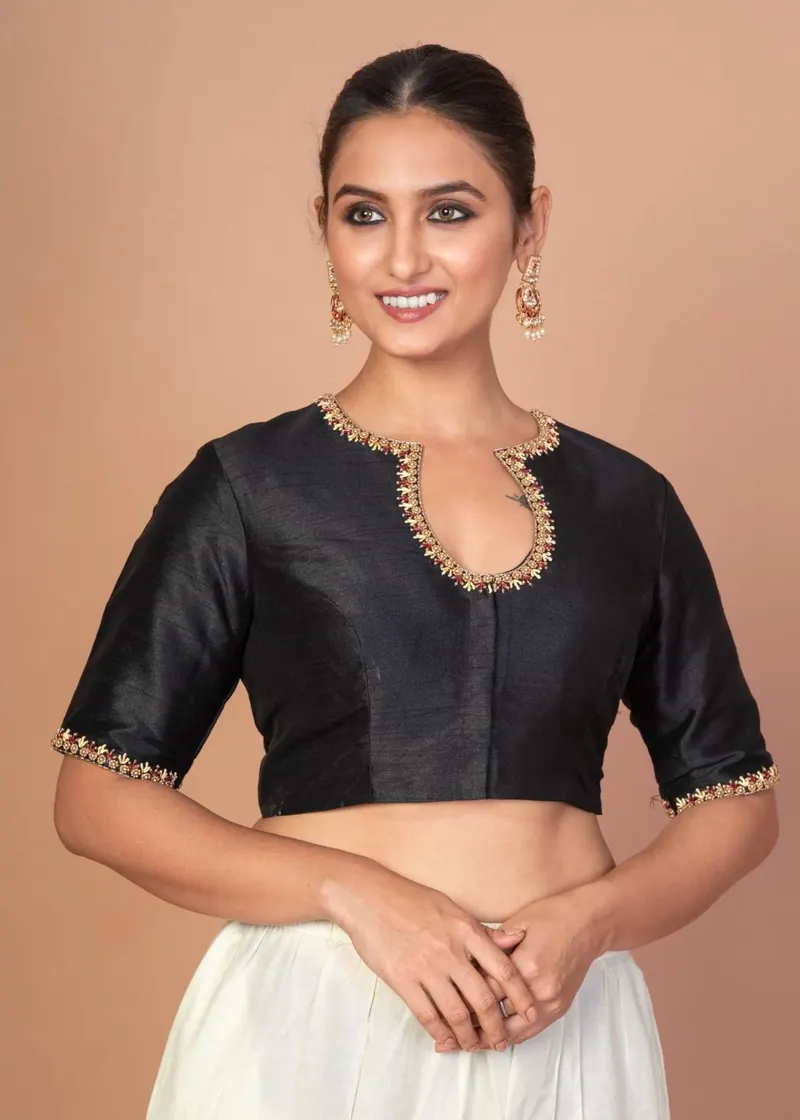
A scoop neckline curves gently across the chest. This version opens at the front, so you can put it on without reaching behind your back. A reinforced underlap behind the hooks also gives the closure more coverage.
If the hooks pull apart at the bust, ask whether the shop can adjust the placket or provide more room through the bodice. Wear it with your pallu pinned as usual and check the closure from the side.
3. Shallow Square Neck for a Smaller Bust
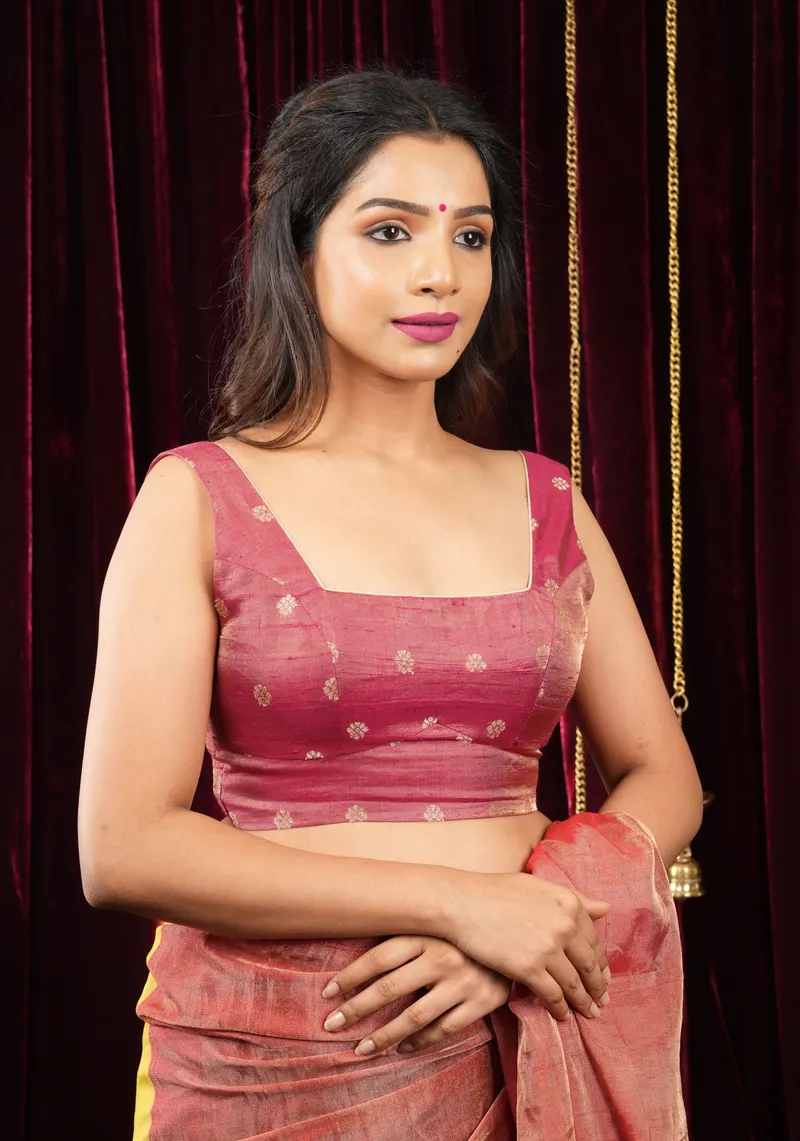
A shallow square neckline gives the print a clear frame across the upper chest. Flat darts shape the bodice without adding bulk. This cut is worth trying if deeper necklines tend to gape when you lean forward.
Choose a shoulder strap wide enough to cover your bra and check that the neckline corners stay flat as you move. If a padded version leaves space at the top of the cup, try a lightly lined version.
A smooth set-in sleeve joins the bodice at the shoulder without a gathered cap. Look for a seam that sits close to your shoulder point. An armhole cut too far inward can feel tight even when the bust fits.
Try reaching forward as if you were holding a tray, then lift both arms. If the sleeve pulls across your back, compare the garment’s shoulder and upper-back width with a blouse you already wear comfortably for several hours.
5. Soft Puff Sleeves for Narrower Shoulders
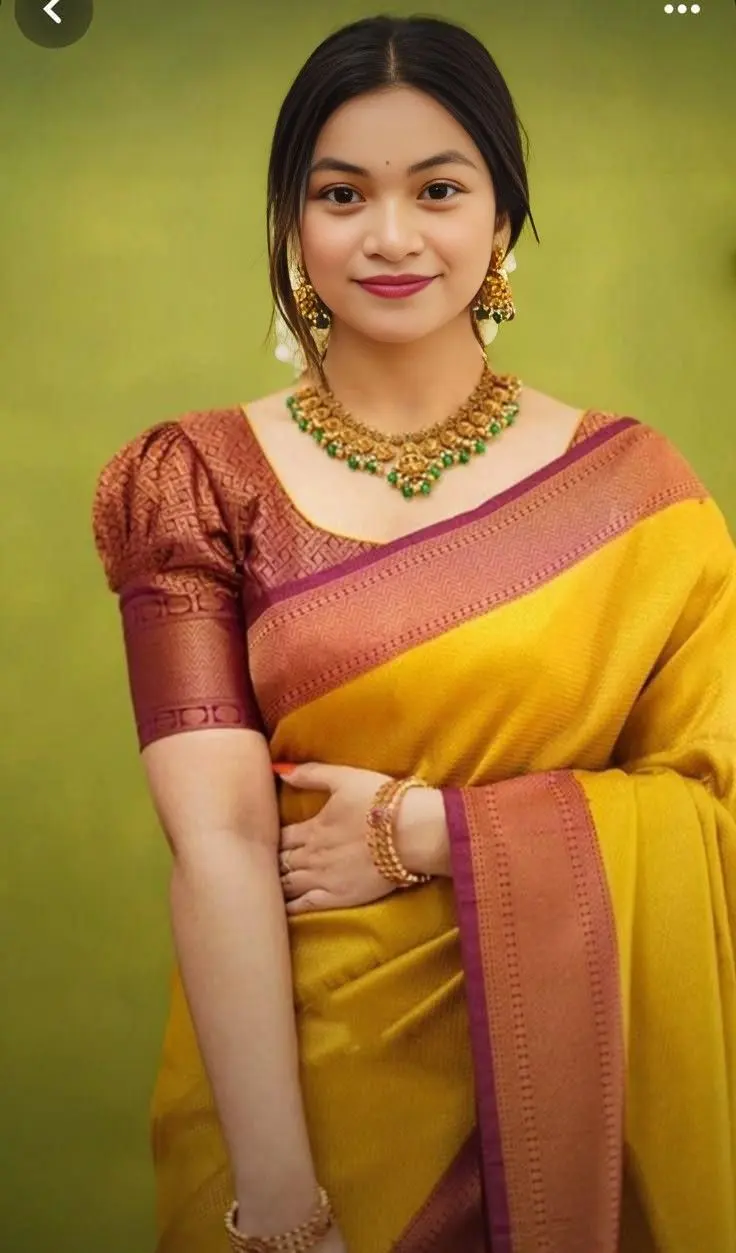
Small gathers at the sleeve cap add shape near the shoulder. A soft puff made with a flexible fabric can sit closer to the body than a heavily gathered sleeve. The band below the puff determines how freely your arm moves.
If you enjoy a little volume at the shoulder, start with a low puff and a comfortable cuff. Drape the saree before deciding how much volume you like, especially if you wear the pallu in narrow pleats.
6. Straight Elbow Sleeves for Fuller Upper Arms
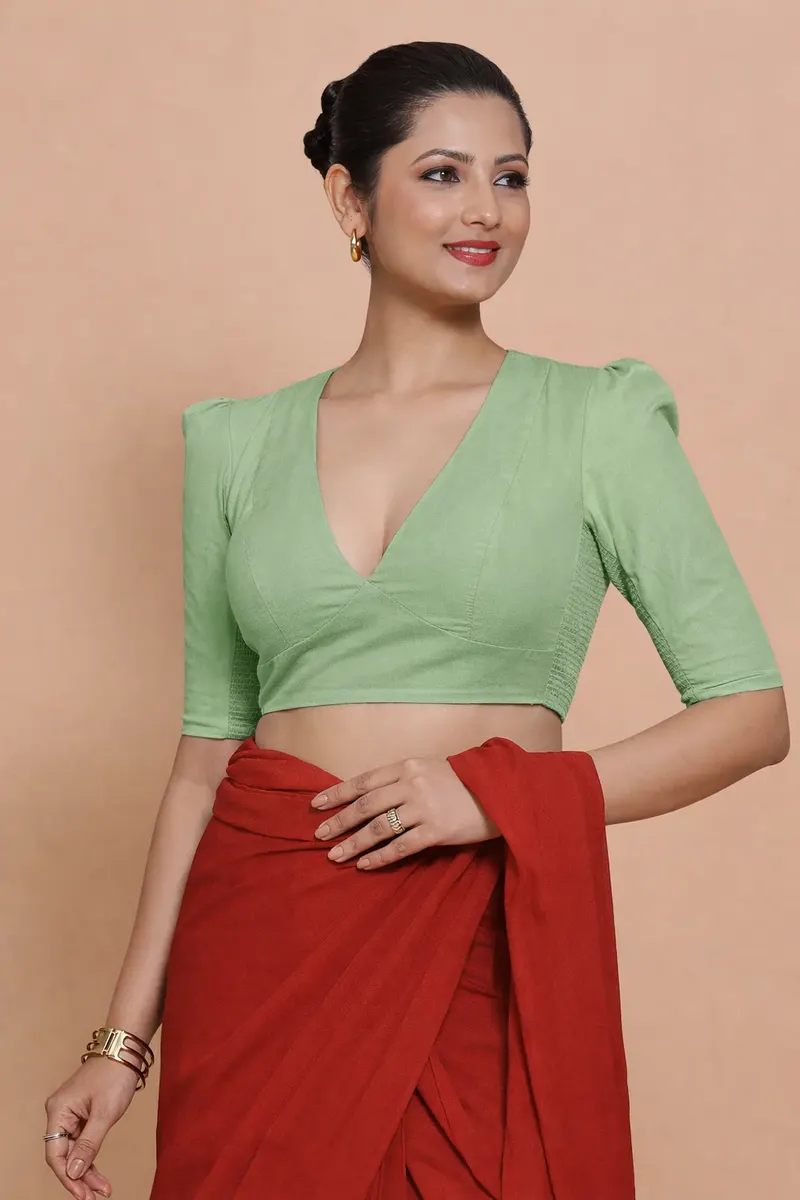
A straight elbow-length sleeve gives coverage through the upper arm with a simple hem. The key measurements are the sleeve width across the fullest part of the arm and the width at the hem, where tightness can limit movement.
Compare both widths against a blouse whose sleeves you like. Bend your elbow and bring your hand to the opposite shoulder during the fitting. If the sleeve digs in, ask about a wider cut or a slightly shorter length.
7. Short Bodice for a Shorter Torso
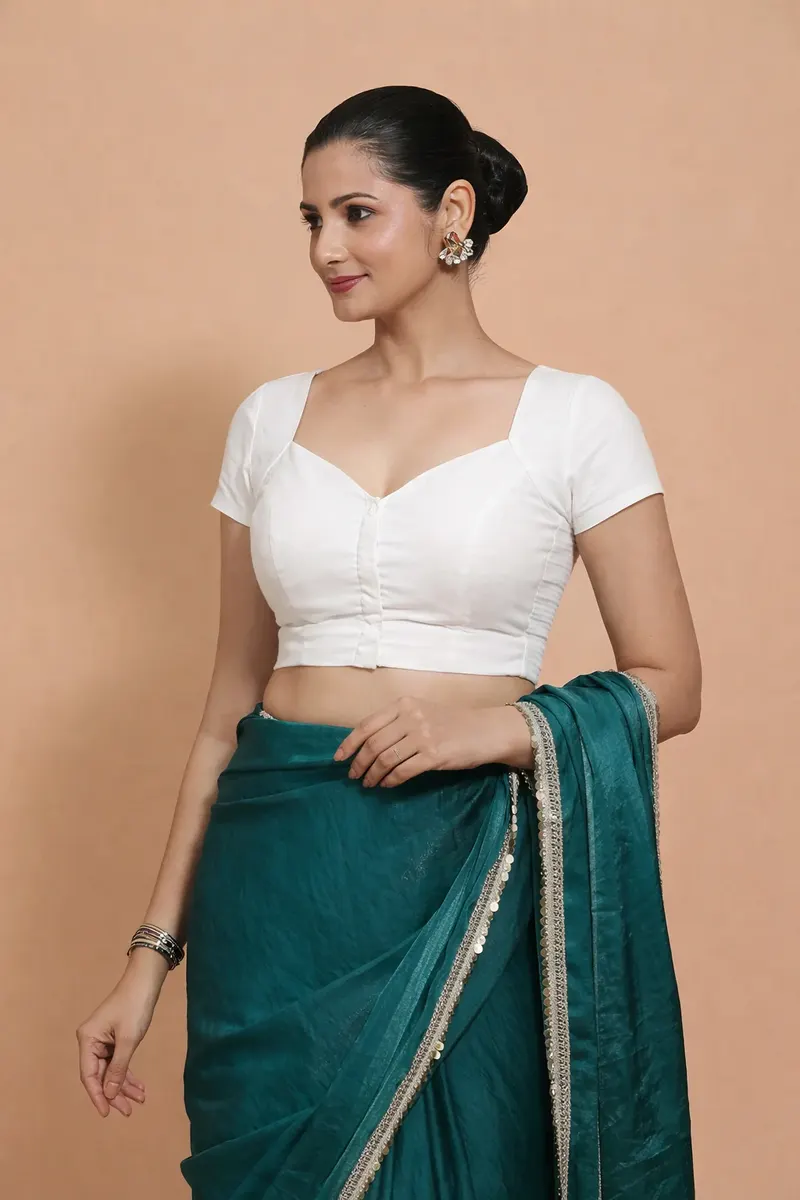
A shorter bodice can leave a little breathing room between the blouse hem and a high saree tuck. Measure from the top of your shoulder near the neck down to where you want the hem to sit.
Try the blouse and saree together while seated. If the hem rides up when you raise an arm, check the bust and armhole fit before shortening it further. A narrow finished hem can help reduce bulk near the tuck.
8. Extended Bodice for a Longer Torso
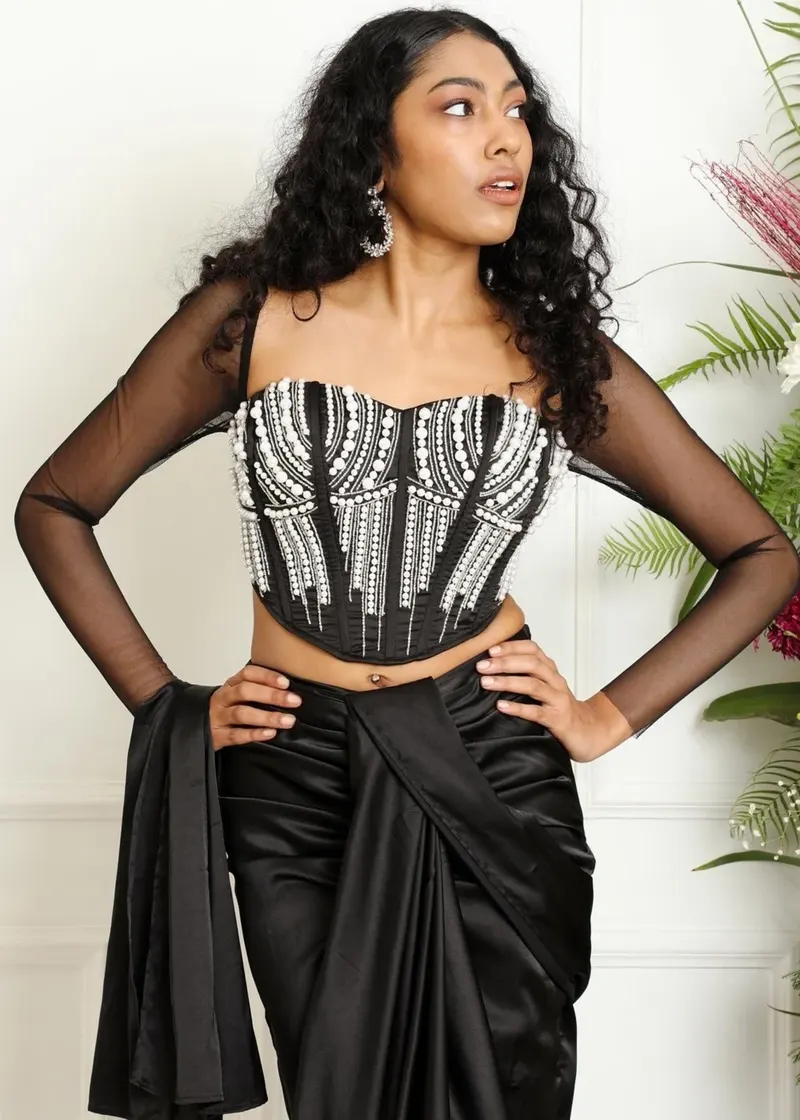
An extended bodice gives you more control over how much midriff shows, especially if a standard blouse finishes higher than you want. Check both front and back lengths, since bust shaping can change where the front hem falls.
Mark your preferred hem while wearing the saree at your usual waist height. Sit and walk before finalizing it. If the hem overlaps the tuck, check whether it lies comfortably over the folds without catching on the petticoat waistband.
9. Waist-Dart Blouse for a Defined Waist
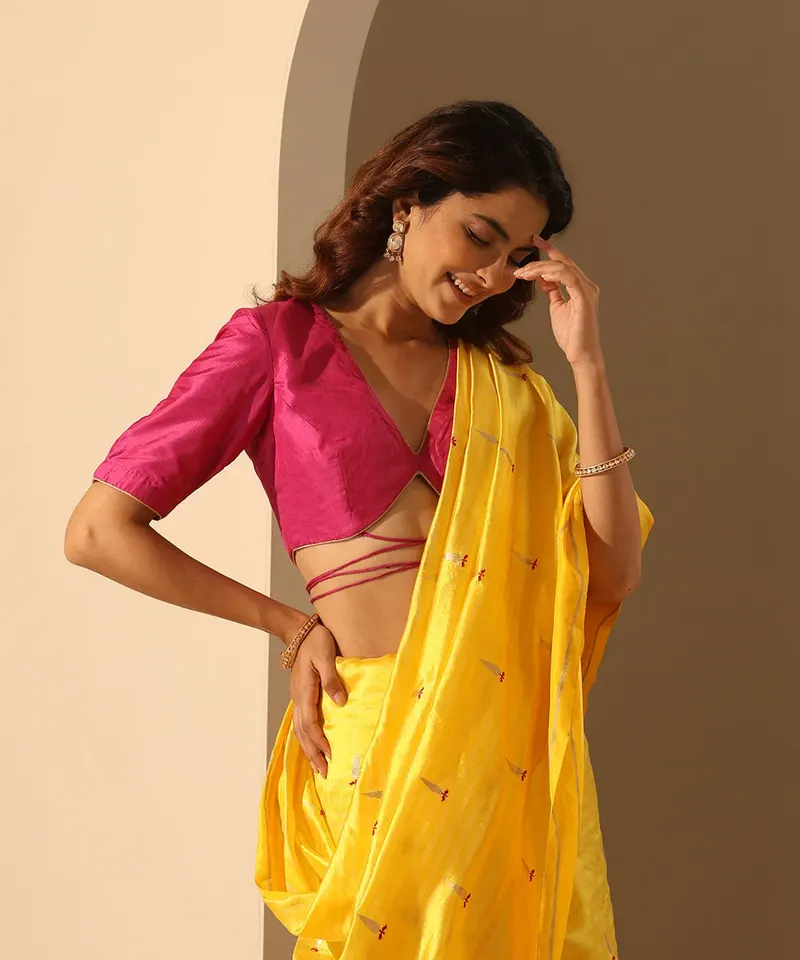
Waist darts taper the bodice below the bust. They can help when a blouse fits your chest but stands away at the lower edge. The dart placement should follow your shape without leaving a pointed ridge under the bust.
Ask the tailor to pin the waist while you breathe normally, then sit before approving it. If you wear your blouse over the saree waistband, leave enough room for that extra layer and check that the hooks close easily.
10. Straight-Hem Blouse for More Room at the Midriff
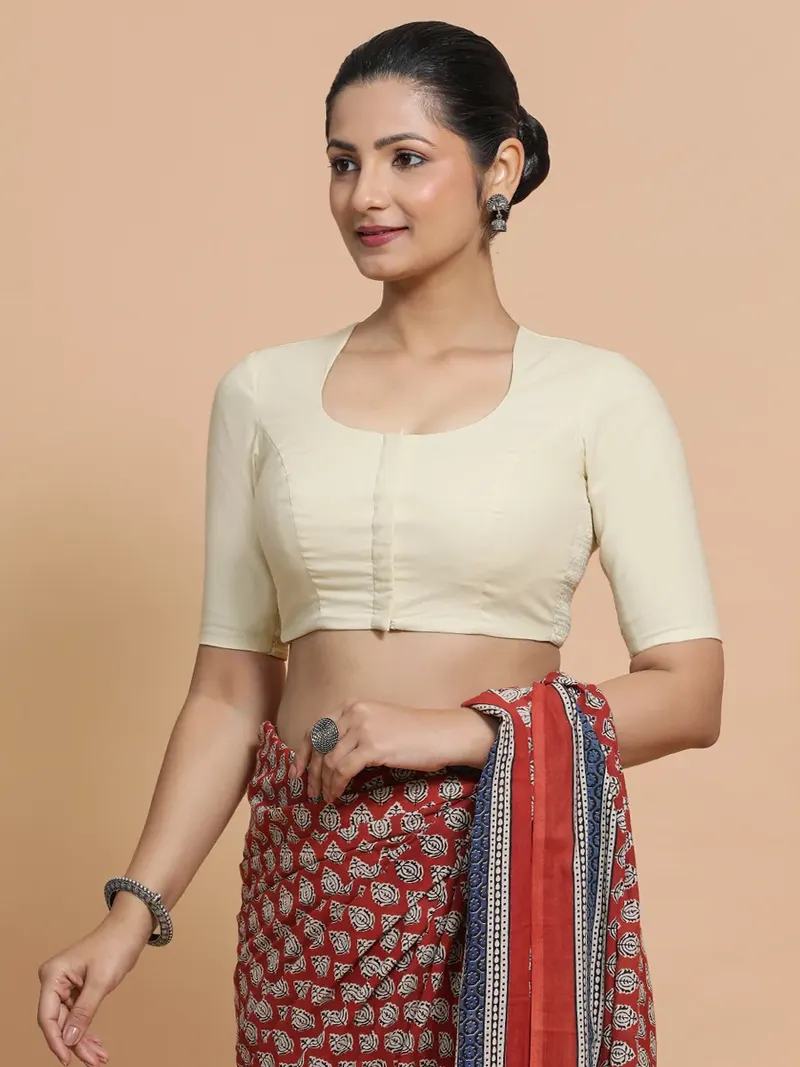
A straight hem with gentle shaping gives you more room around the lower bodice. It can suit anyone who prefers less pressure around the ribs or whose bust and lower-bodice measurements fall into different sizes on the seller’s chart.
Measure around the exact level where the hem will sit. Ask for the finished garment measurement there and check how it feels when you sit. You can keep the shoulder and bust fitted while asking for extra room below.
What to Check Before Buying or Stitching
- Measure a blouse you already like laid flat and keep the measurements handy for online shopping.
- Ask for front and back neck depths separately if you want both sides to cover your bra.
- Check the eyelet coverage in daylight, especially if the blouse has light fabric or a contrasting lining.
- Ask whether a print motif crosses the centre seam. If alignment matters to you, check the front photo before ordering.
- Pin your saree where you usually wear it and check whether the pin catches the blouse lining or the eyelet embroidery.
Choose the Fit You’ll Want to Wear Again
Start with the part of a blouse you usually adjust during the day. A sleeve that lets you reach, a neckline that lies flat or a hem that clears your saree tuck will make more difference to comfort than any body-type label. Once the fit works, choose a print you enjoy.